Apple
App Quality Report
Powered by Testers.AI
B86%
Quality Score
6
Pages
112
Issues
7.5
Avg Confidence
7.7
Avg Priority
28 Critical70 High14 Medium
Testers.AI
>_ Testers.AI AI Analysis

Apple scored B (86%) with 112 issues across 6 tested pages, ranking #6 of 14 US retail sites. That's 7 more than the 105.1 category average (57th percentile).

Top issues to fix immediately: "API Key Exposed in URL Query Parameters" โ€” Move the API key from URL query parameters to a secure HTTP header (e; "Massive Number of Render-Blocking Resources Loading Synchronously" โ€” 1) Defer non-critical JavaScript using async/defer attributes; 2) Split CSS into critical path CSS (inline in <head>)...; "Missing Cache Headers on Static Resources" โ€” 1) Add Cache-Control headers to all static assets: Use long expiration times (1 year+) for versioned/hashed filenames (e.

Weakest area โ€” accessibility (6/10): Images lack visible alt-text indicators, color contrast appears adequate, but keyboard navigation efficiency and screen reader ...

Quick wins: Add explicit alt-text and captions for all product images to improve screen reader experience. Implement a sticky navigation or quick-access menu for easier product filtering and discovery.
Qualitative Quality
Apple
Category Avg
Best in Category
Issue Count by Type
A11y
32
Content
26
UX
4
Security
2
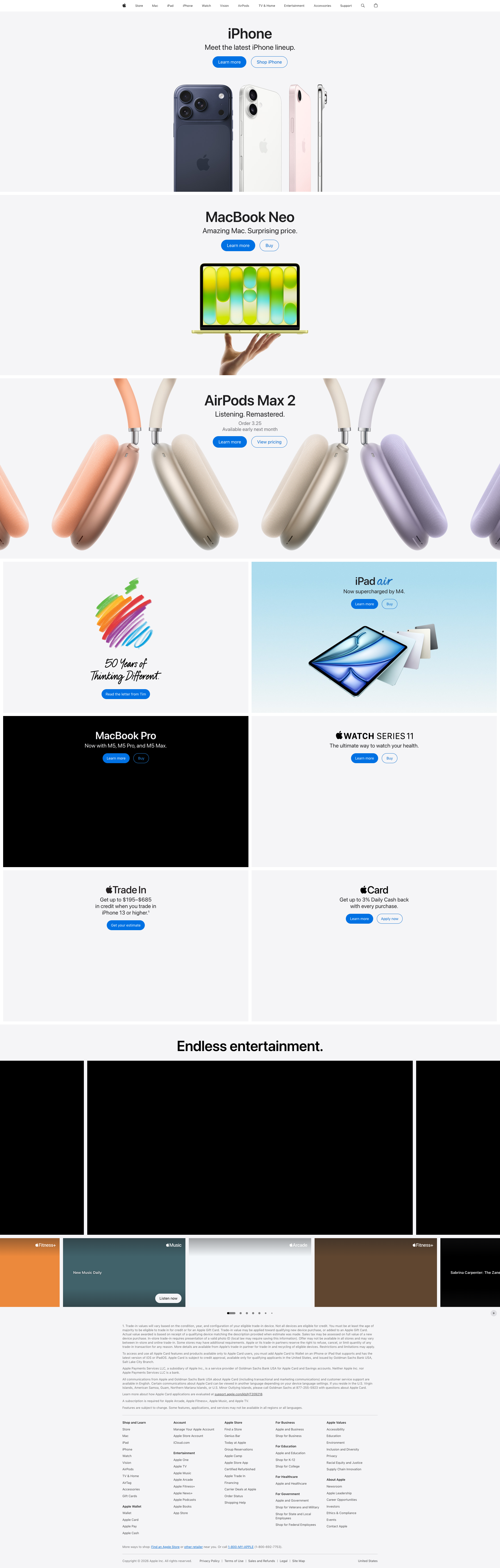
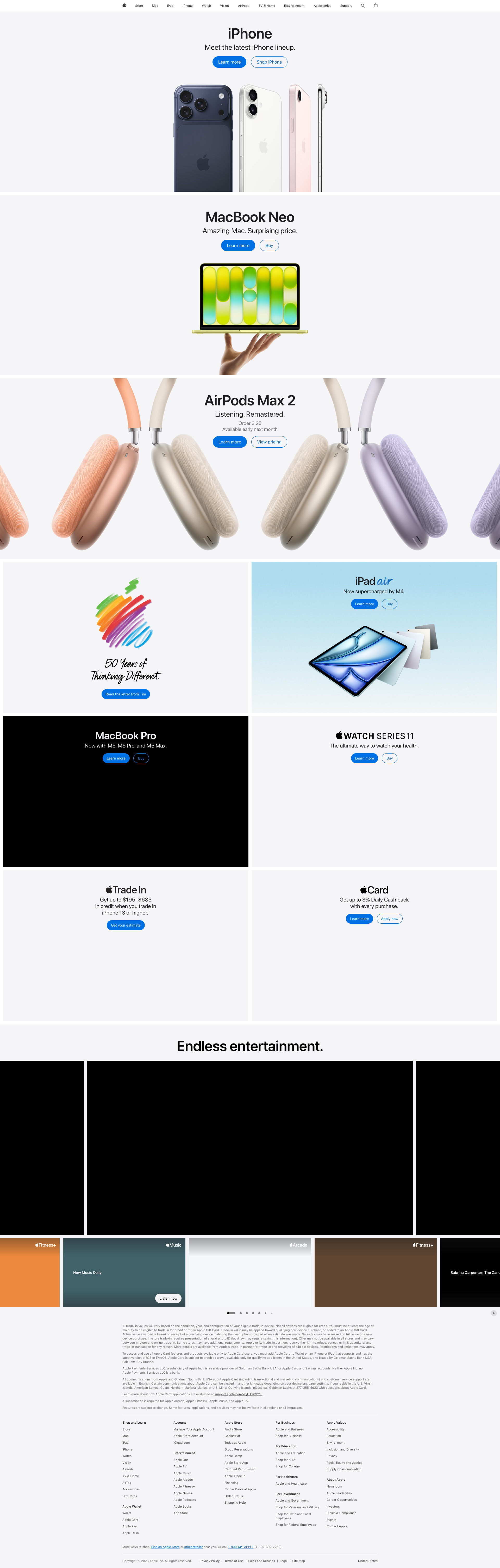
Pages Tested ยท 6 screenshots
Detected Issues ยท 112 total
1
API Key Exposed in URL Query Parameters
CRIT P10
Conf 9/10 OtherSecurity
Prompt to Fix
The endpoint /us/shop/bag/status currently accepts an API key as a URL query parameter (?apikey=SFX9YPYY9PPXCU9KH). This is a critical security vulnerability. Refactor this endpoint to: (1) Accept authentication via HTTP Authorization header instead (e.g., Bearer token or session cookie); (2) Implement server-side session validation tied to the user's authenticated session; (3) Remove all URL-based API key parameters; (4) Add logging to detect and alert on any remaining URL parameter API key usage. Immediately rotate the exposed API key and audit all logs for unauthorized access using this key.
Why it's a bug
The API key 'SFX9YPYY9PPXCU9KH' is exposed in plain text within the URL query parameter 'apikey' for the shopping bag status endpoint. This is a critical security vulnerability because: (1) URL parameters are logged in browser history, server logs, and proxy logs; (2) The key can be intercepted via man-in-the-middle attacks; (3) Anyone with access to logs can use this key to access the shopping bag API; (4) This violates OWASP secure coding practices for credential handling.
Why it might not be a bug
This could potentially be dismissed if the key has extremely limited scope and short TTL, but even then, exposing any API key in URLs is a security anti-pattern.
Suggested Fix
Move the API key from URL query parameters to a secure HTTP header (e.g., 'Authorization: Bearer' or custom header). Implement server-side session validation instead of API key in URLs. Rotate the exposed API key immediately and implement automated key rotation policies.
Why Fix
Exposing API keys in URLs creates a persistent attack surface. An attacker could use this key to access user shopping bags, modify orders, or extract sensitive commerce data. This is a direct path to account compromise and fraud.
Route To
Backend Security Engineer / API Security Lead
Page
Tester
Sharon ยท Security Networking Analyzer
Technical Evidence
Console: No console text available
Network: GET https://www.apple.com/us/shop/bag/status?apikey=SFX9YPYY9PPXCU9KH - Status: 200
2
Sensitive User Data Transmitted in Analytics Tracking Requests
CRIT P9
Conf 8/10 OtherSecurity
Prompt to Fix
Review all requests to securemetrics.apple.com in the analytics tracking implementation. The current tracking sends visitor identifiers, timestamps, page names, browser dimensions, currency, and channel information to third-party analytics. Implement a consent management system that: (1) Blocks all securemetrics tracking requests until user explicitly opts-in via cookie consent banner; (2) Implements first-party analytics where possible instead of third-party tracking; (3) Minimizes PII transmission by using anonymized identifiers instead of persistent visitor IDs; (4) Respects the Do Not Track header (if DNT header is present, skip securemetrics tracking); (5) Documents all tracking in privacy policy and provides easy opt-out mechanism.
Why it's a bug
Multiple securemetrics.apple.com requests transmit sensitive user data including: (1) Browser resolution and dimensions (bw=1920&bh=1080); (2) Page names revealing user location (pageName=apple%20-%20index%2Ftab%20%28us%29); (3) Visitor IDs (fid=2E64F49FFBFDAAFB-00A16927E9519ED8, vidn=34DC4FCEF2AA1C26-4000083320559D4E); (4) Currency (cc=USD) and channel information (ch=www.us.homepage); (5) Timestamps revealing when users visit. While these requests use HTTPS, the combination of data points allows tracking and profiling. This enables advertising networks and third parties to build detailed behavioral profiles without explicit consent.
Why it might not be a bug
Analytics tracking is common practice. However, the issue is that this data is transmitted to a third-party analytics domain without clear user consent mechanisms, potentially violating GDPR, CCPA, and other privacy regulations.
Suggested Fix
Implement proper consent management: (1) Require explicit user opt-in before transmitting tracking data to securemetrics; (2) Provide clear privacy policy linking; (3) Allow users to opt-out; (4) Minimize data transmitted (use anonymized IDs instead of identifiers); (5) Implement Do Not Track (DNT) header respecting; (6) Consider first-party analytics instead of third-party tracking.
Why Fix
Uncontrolled tracking data transmission violates user privacy rights and exposes the company to regulatory fines under GDPR (up to 4% of revenue) and CCPA (up to $7,500 per violation). Users have a right to know what data is collected and shared.
Route To
Privacy Engineer / Data Protection Officer / Frontend Security Lead
Page
Tester
Sharon ยท Security Networking Analyzer
Technical Evidence
Console: No console text available
Network: GET https://securemetrics.apple.com/b/ss/applestoreww/1/JS-2.23.0/s28298251606225?AQB=1&ndh=1&pf=1&t=16%2F2%2F2026%2017%3A26%3A5%201%20420&fid=2E64F49FFBFDAAFB-00A16927E9519ED8&ce=UTF-8&cdp=2&cl=1800&pageName=apple%20-%20index%2Ftab%20%28us%29&g=https%3A%2F%2Fwww.apple.com%2F&cc=USD&ch=www.us.homepage&server=ac-2.29.0&h1=www.us.homepage&v3=aos%3A%20us&l3=D%3Das_tex&c4=D%3Dg&v4=D%3DpageName&v14=en-us&c20=aos%3A%20us&v54=D%3Dg&v97=s.t-p&s=800x600&c=24&j=1.6&v=N&k=Y&bw=1920&bh=1080&AQE=1 - Status: 302

3
Early LLM/AI Endpoint Calls on Page Load Without User Interaction
CRIT P9
Conf 8/10 Other
Prompt to Fix
Review the following AI endpoint calls that are firing on page load: main.built.js, endless-entertainment-gallery.built.js, and image logo/promo endpoints. Refactor the code to defer these AI/LLM requests until after the initial page render completes or until user interaction occurs. Implement lazy-loading with intersection observers for gallery components and recommendation features. Ensure critical content renders before any AI API calls are made. Test that Core Web Vitals (LCP, FID, CLS) improve after deferral.
Why it's a bug
Network activity shows multiple AI/LLM endpoints being invoked during initial page load (marked with โš ๏ธ AI/LLM ENDPOINT DETECTED), including main.built.js, endless-entertainment-gallery.built.js, and multiple image endpoints. These requests fire immediately on page load before any user interaction, causing unnecessary performance overhead and potential token bloat. This is a common GenAI code issue where AI-powered features are not deferred to user interaction, resulting in degraded initial page load performance and increased API costs.
Why it might not be a bug
It's possible these are legitimate pre-loading strategies for frequently-accessed features, and deferring all AI calls may negatively impact perceived responsiveness. However, the pattern of multiple AI endpoints firing simultaneously on load is suspicious and typical of auto-generated code that hasn't been optimized.
Suggested Fix
Audit all AI/LLM endpoint calls in main.built.js, endless-entertainment-gallery.built.js, and related scripts. Defer non-critical AI requests until after initial page render or until the user interacts with features that require AI functionality. Implement lazy-loading patterns for AI-powered galleries and recommendations. Use intersection observers to trigger AI calls only when elements become visible in the viewport.
Why Fix
Deferring AI calls improves Core Web Vitals (LCP, FID, CLS), reduces unnecessary API costs, improves privacy by not collecting data until needed, and provides better perceived performance. This is especially important for e-commerce sites where initial load speed directly impacts conversion rates.
Route To
Performance Engineer / Frontend Architect
Page
Tester
Jason ยท GenAI Code Analyzer
Technical Evidence
Console: โš ๏ธ AI/LLM ENDPOINT DETECTED on multiple requests during page load
Network: GET https://www.apple.com/v/home/cm/built/scripts/main.built.js - Status: 200 โš ๏ธ AI/LLM ENDPOINT DETECTED, GET https://www.apple.com/autopush/us/fam-gallery/scripts/endless-entertainment-gallery.built.js - Status: 200 โš ๏ธ AI/LLM ENDPOINT DETECTED
+109
109 more issues detected  View all →
Third-Party Graffiti Tags Analytics Loaded Without User Cons...
Third-Party AI Domains Invoked Without Explicit User Consent...
Missing Cache Headers on Static Resources
and 106 more...
Unlock All 112 Issues
You're viewing the top 3 issues for Apple.
Sign up at Testers.AI to access the full report with all 112 detected issues, detailed fixes, and continuous monitoring.
Sign Up at Testers.AI or let us run the tests for you